A capsule wardrobe is a small, fixed set of clothes chosen so that every piece works with most of the rest, plus a test that controls what gets in. The standard test is the 30-wear rule: nothing is bought unless it will be worn at least thirty times. The definition, the test and the count math sit below, kept plain.
The phrase gets stretched over shopping lists all over the internet, which is why the question what is a capsule wardrobe deserves a straight answer instead of another product roundup. Three things actually define one: a fixed set, a mixing rule and a wear test. This connects to our earlier piece, White sneakers women live in come down to three pairings.
The definition, kept plain
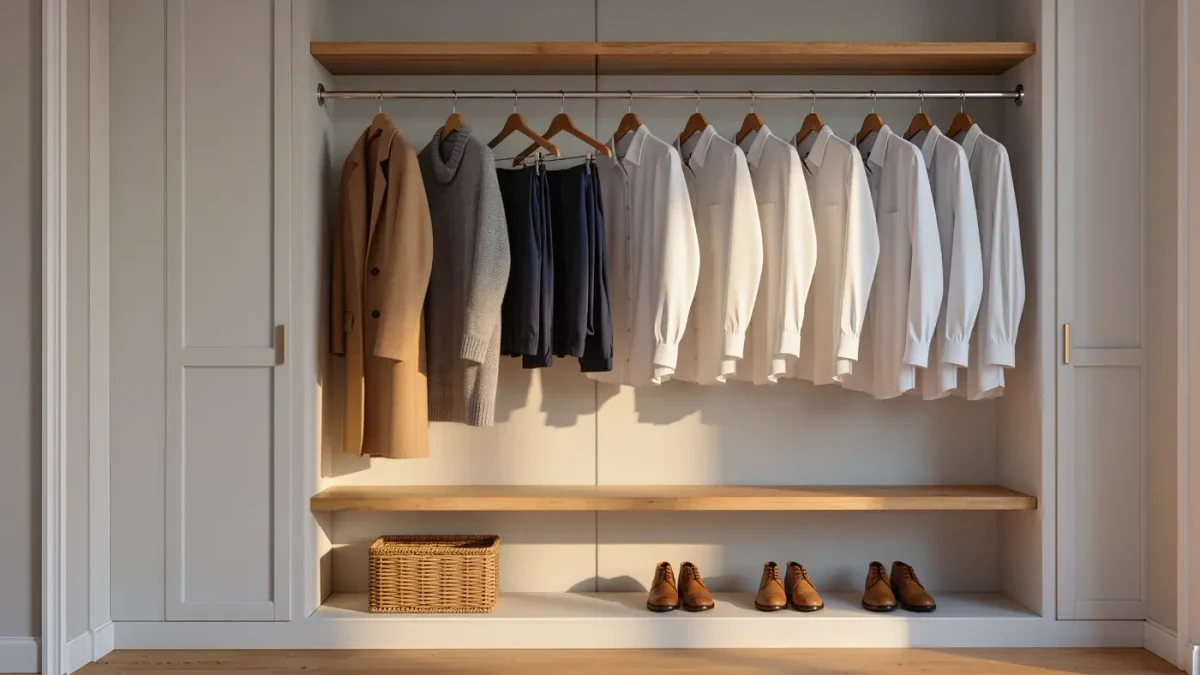
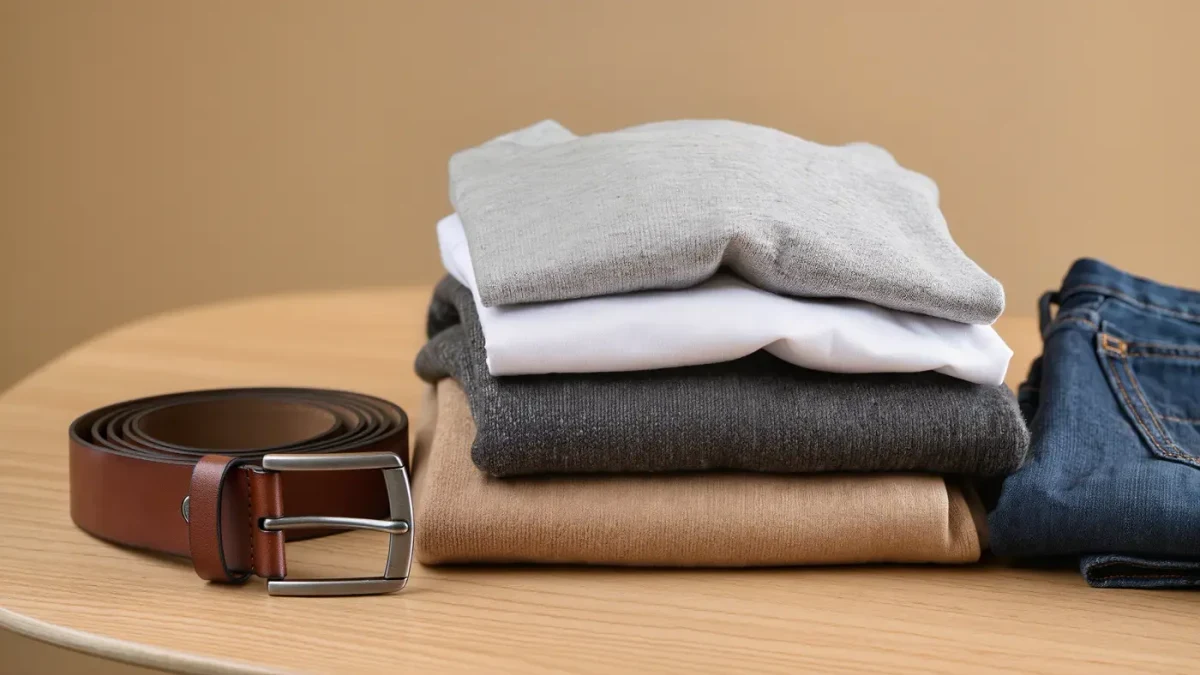
Vogue's 2025 guide to the capsule wardrobe builds one around six nonnegotiables: a crisp white shirt, straight-leg jeans, a white tee that goes with anything, an easy black dress, a classic crewneck and fluid black trousers. The thread running through all six is versatility. Each piece is plain enough to sit under anything else in the set, and the palette stays neutral so any top meets any bottom without a clash.
That is the whole idea in one sentence. What is a capsule wardrobe, functionally? A set of clothes in which the number of working pairings is larger than the number of pieces. A closet of ten items that all mix beats a closet of sixty that each need a specific partner.
The 30-wear test and where it began
The test has a documented origin. Harper's Bazaar UK traces the 30 Wears Challenge to 2015, when Eco-Age co-founder Livia Firth launched it with the journalist Lucy Seigle. The rule is a question asked before money moves: will this garment be worn at least thirty times? If the honest answer is no, the piece stays in the store.
The same report notes that some campaigners now find thirty too low a bar, with one designer arguing for thousands of wears instead. Either way, the test works because it is binary. It forces a prediction, and predictions expose impulse buys faster than any style advice can. It also fits the capsule question neatly: anyone asking what is a capsule wardrobe is really asking how to stop buying the wrong things, and the 30-wear rule is the stop sign.
The count math, done honestly
There is no official item count, so the honest version of the math is arithmetic, not dogma. Three tops, two bottoms, two layers and two pairs of shoes make nine pieces. Those nine produce dozens of distinct outfits, because each top meets each bottom and each layer, and the shoe choice changes the finish again. Add a seventh piece, a black skirt, and the count climbs further: it meets every top, both layers and both shoe choices. One plain item can add a dozen outfits.
The rule the math exposes is simple. A new piece only earns its place if it pairs with at least half of what already exists. A printed skirt that works with one tee adds a single outfit; a plain tank that works with everything adds dozens. That is the answer to what is a capsule wardrobe when the question is really about shopping: a system where addition is slow and subtraction is constant. For related coverage, see Sneakers for women fit right only when bought by measurement.
What goes in and what stays out
The spine comes straight from the Vogue list: shirt, jeans, tee, black dress, crewneck, tailored trousers. Seasonal pieces rotate through that spine rather than replacing it. A coat for winter and sandals for summer borrow the same neutral logic, and neither breaks the mixing rule. Function answers the rest. What is a capsule wardrobe for, in daily terms? Fewer decisions, faster mornings, and nothing that needs a partner piece pulled from another store.
What stays out is anything that passes the mirror test but fails the wear test. Statement pieces with one partner, trend colors that pair with nothing, and duplicates of items already owned all fail the thirty-wear question on honest counting. The capsule stays small because the door is narrow, not because the closet is.
Conclusion
So, what is a capsule wardrobe after the math? A fixed, mixing set plus a gate. The 30-wear test, launched in 2015 by Livia Firth and Lucy Seigle, is the gate; the six-piece spine from Vogue's guide is the set. Build the spine, apply the test, and let the arithmetic of pairings decide everything else. The count stays honest because every piece has to work for its place.