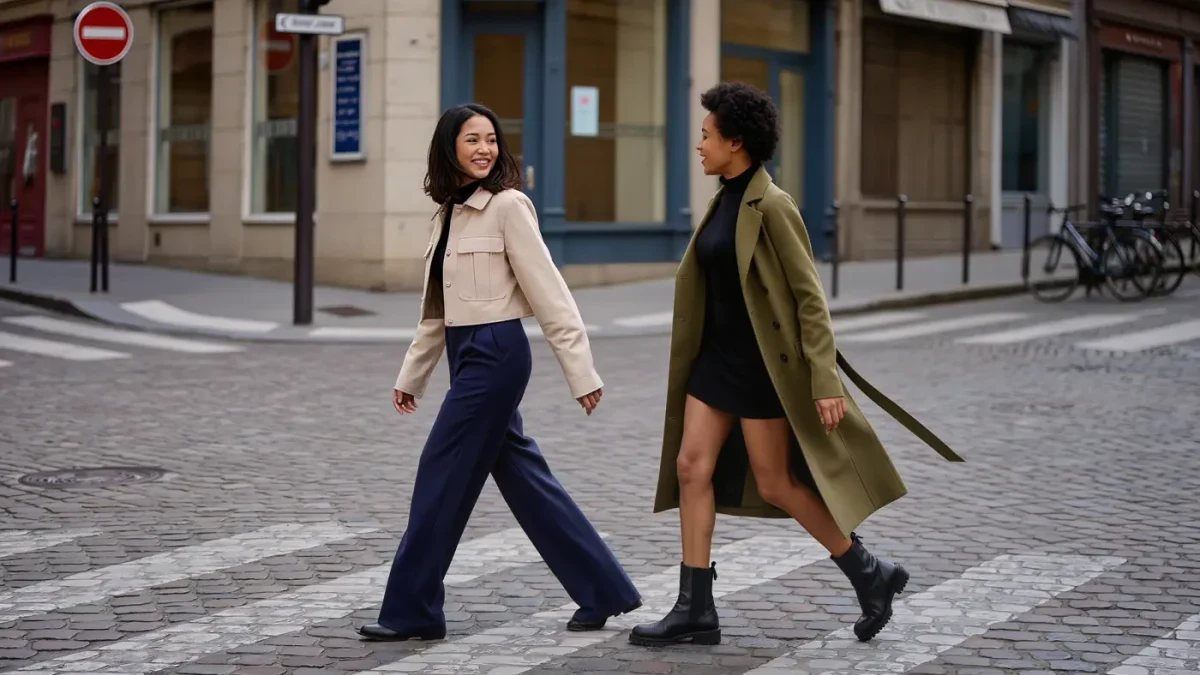
Cute outfits are less about new clothes and more about new combinations. The twenty formulas below cover casual days, office hours and evenings out, and each one is built from a small set of pieces most wardrobes already hold. If a combo needs one purchase, it is named plainly, and the case for buying it is argued rather than assumed.
The word itself sets a fair bar. According to Vocabulary.com, something cute is attractive in a pleasing, nonthreatening way, and easy to like. That is a useful test for an outfit: it should look friendly, not exhausting, and it should never read as a costume. Every formula below passes that test on purpose.
What makes an outfit read as cute rather than try-hard?
Proportion, one repeated colour, and restraint. An outfit reads as cute when one element is softened — a rounded collar, a shorter hem, a cardigan instead of a jacket — and everything else stays simple. The dictionary's second sense of the word is a warning worth keeping: cute can also mean overly clever and a little bit fake. Three trends stacked in one look is exactly that.
The practical rule is one statement piece per outfit, then quiet support around it. A pleated skirt with a plain fitted tee works. The same skirt with a printed blouse, coloured tights and chunky boots starts competing with itself. Pick the star, let the rest understudy.
Fit does the rest. Hems that end where the limb is narrower — at the wrist bone, at the slimmest part of the calf — always look more considered than hems that stop mid-width. That is a tailor's trick, it costs nothing, and it works at every price point and every size.
Which casual combos work without looking sloppy?
Casual is where most people have the most clothes and the fewest outfits. The fix is structure in one place: a third layer, a tucked waist, or a shoe with a defined shape. Eight formulas cover most weekends.
- Straight jeans, white fitted tee, unstructured blazer. The blazer does the work; the tee keeps it honest. Trainers or loafers both finish it.
- Knit vest over a collared shirt, wide jeans. The collar softens the vest, the wide leg balances the fitted top. Add a belt only if the shirt is untucked.
- Cardigan buttoned as a top, long skirt. A cardigan worn backwards-to-front, or simply done up to the collarbone, reads dressed-up with zero effort.
- Denim jacket, midi dress, white trainers. The jacket shortens the dress visually and adds a waistline break. Works on every body, which is why it never leaves rotation.
- Plain sweats, crisp white shirt open over the top. The shirt is the whole trick. Buttoned, it is loungewear; open over a tee, it is an outfit.
- T-shirt dress, canvas belt, flat sandals. A belt turns a sack into a shape. Choose one in a colour already in the dress print.
- Utility trousers, striped top, boat shoes or clean trainers. Stripes do the pattern work so nothing else has to.
- Matching knit set, long coat. A set is an outfit that cannot fail. The coat makes it look deliberate in winter.
What this means for the wallet: casual formulas live or die on fit, not price. A well-fitting tee from a multipack beats an ill-fitting designer one every time. Spend where fit is hard to fake — trousers and jeans — and save on tees and layers.
How do you make office dressing feel fresh without breaking a dress code?
Work outfits go stale because the pieces are fine but the pairings never change. Six formulas reuse the same core wardrobe in new ways, which is the cheapest update available.
- Wide trousers, fitted ribbed top, sharp flats. The volume contrast is the whole look. Keep jewellery to one pair of earrings.
- Pencil or A-line skirt, fine knit tucked in, low block heel. A knit instead of a blouse softens the formality without softening the standard.
- Sheath dress, collarless coat, pointed flats. The collarless coat is the modern note; a traditional lapel dates the same dress by a decade.
- Monochrome in one tone, head to hem. Different textures — wool trouser, cotton tee, leather shoe — keep a single colour from flattening.
- Culottes, tucked shirt, loafers with visible socks. The sock makes it current. The culotte length matters: at or just below the widest part of the calf.
- Blazer over a slip dress. The oldest trick in the going-out book, pulled into daylight with opaque tights and flats.
Our analysis of what actually gets worn: the formulas that survive a full workweek are the ones with no dry-clean-only piece in them. Machine-washable trousers and knits get chosen over beautiful high-maintenance options every single morning. Buy the washable version first.
What works for going out without a full costume change?
Evening outfits fail in two directions: too little (a going-out top and nothing else holding it together) or too much (everything shiny at once). Six formulas thread the gap, and all six start from daytime pieces.
- Satin skirt, plain fitted tee, heeled sandal. One shine element only. The tee keeps the satin from reading as occasion-wear.
- Little black dress, coloured shoe. The dress does the shape, the shoe does the personality. Swap the shoe and the same dress becomes a different outfit.
- Leather (or lookalike) trousers, soft knit, sleek boot. Balance hard with soft or the whole look turns stiff.
- Slip dress under a fine-gauge jumper. The slip hem showing below the jumper hem is the detail. It reads styled, not accidental, when the lengths are deliberate.
- Tailored shorts, blazer, tights, heeled boot. Shorts at night only work with the blazer to give them intent.
- Matching co-ord in a dressy fabric. A satin or crepe top-and-skirt set removes every decision. One purchase, one outfit, done.
The skip list matters here: skip the going-out top bought for one night, skip shoes you cannot walk to the taxi in, and skip anything that needs constant adjusting. An outfit you fidget with is not a cute outfit, whatever it cost.
How do you build these combos without buying a new wardrobe?
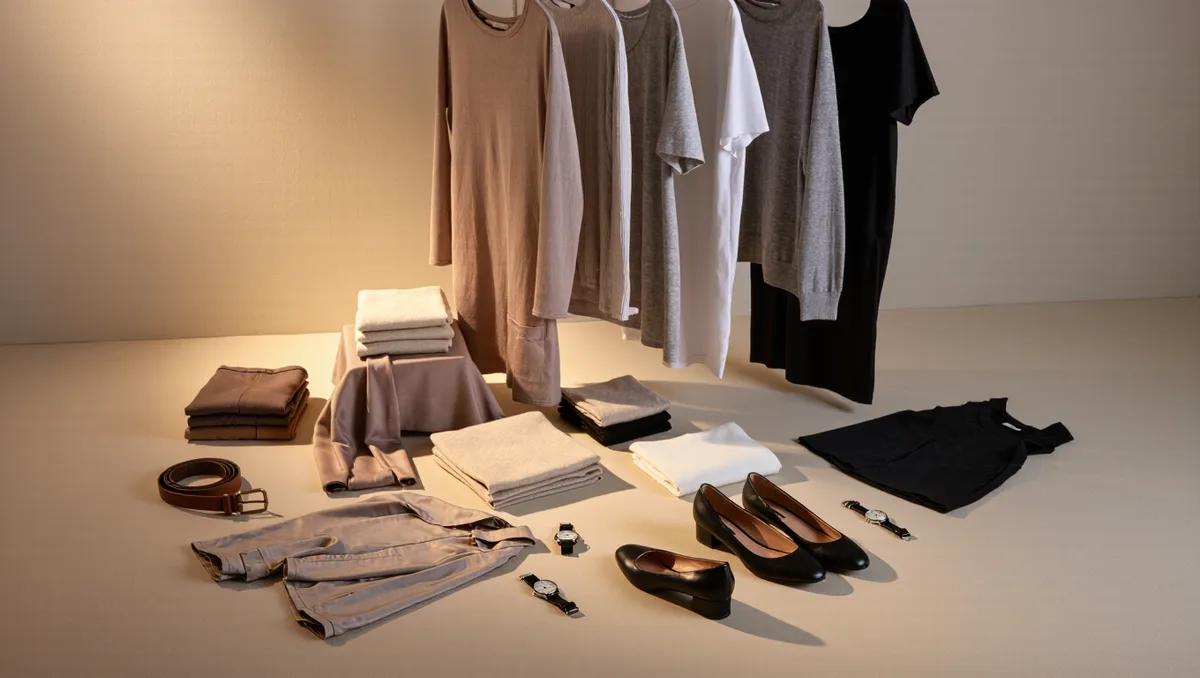
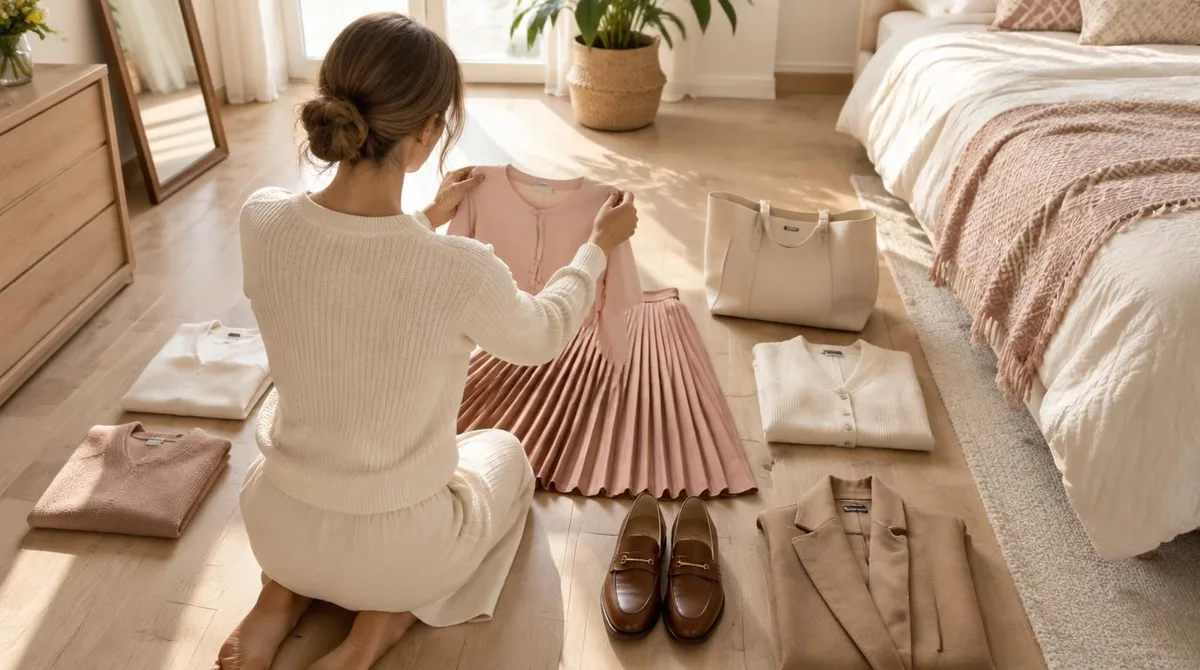
Start with an inventory, not a shopping trip. Lay out what you own in three piles — bottoms, tops, layers — and force three new pairings before you allow yourself a purchase. Most wardrobes contain at least ten unworn combinations; the gap is in the pairing, not the stock.
Then buy to fill holes, not moods. The pieces these formulas lean on hardest are a good straight-leg trouser, a fitted plain tee in white and black, one unstructured blazer, one mid-length skirt and one shoe that works with both hem lengths. If a purchase does not complete at least two formulas, it is a want, not a need — and wants are fine, but they should be labelled honestly.
Cost-per-wear is the honest scorecard. A coat worn four months at four wears a week is cheaper per outing than a novelty dress worn once, whatever the tags say. Track it loosely, not obsessively; the point is to notice when the cheap thing is quietly winning, because it often is.
Colour repetition is the other free upgrade. Choose two neutrals and one accent you actually wear, then aim every new purchase at that trio. Outfits click when the colours repeat across pieces; they stall when every item is its own idea. For a broader read on what is moving through shops right now, the current trends coverage tracks which shapes are worth adding and which will be gone by spring.
What is the takeaway for this season?
Twenty formulas, one principle: soften one element, keep the rest quiet, and check the hem lengths. Cute is a proportion problem before it is a shopping problem, and the dictionary definition — attractive in a pleasing, easy-to-like way — is a better brief than any trend report.
Practical steps, in order: audit what you own, build the three-pile pairings, buy only to complete formulas, and score everything on cost-per-wear. The result is a wardrobe that produces outfits on demand, which is the entire point. If a piece in your rotation has earned its keep, replace it in the same cut when it wears out; if it has sat untouched for a season, that is the item to pass on. For more shopping-first coverage of what is worth buying and what is worth skipping, the site's shopping section follows the same logic: argue the case, then decide. We covered a connected angle in 2000s outfits return on the back of three objects.