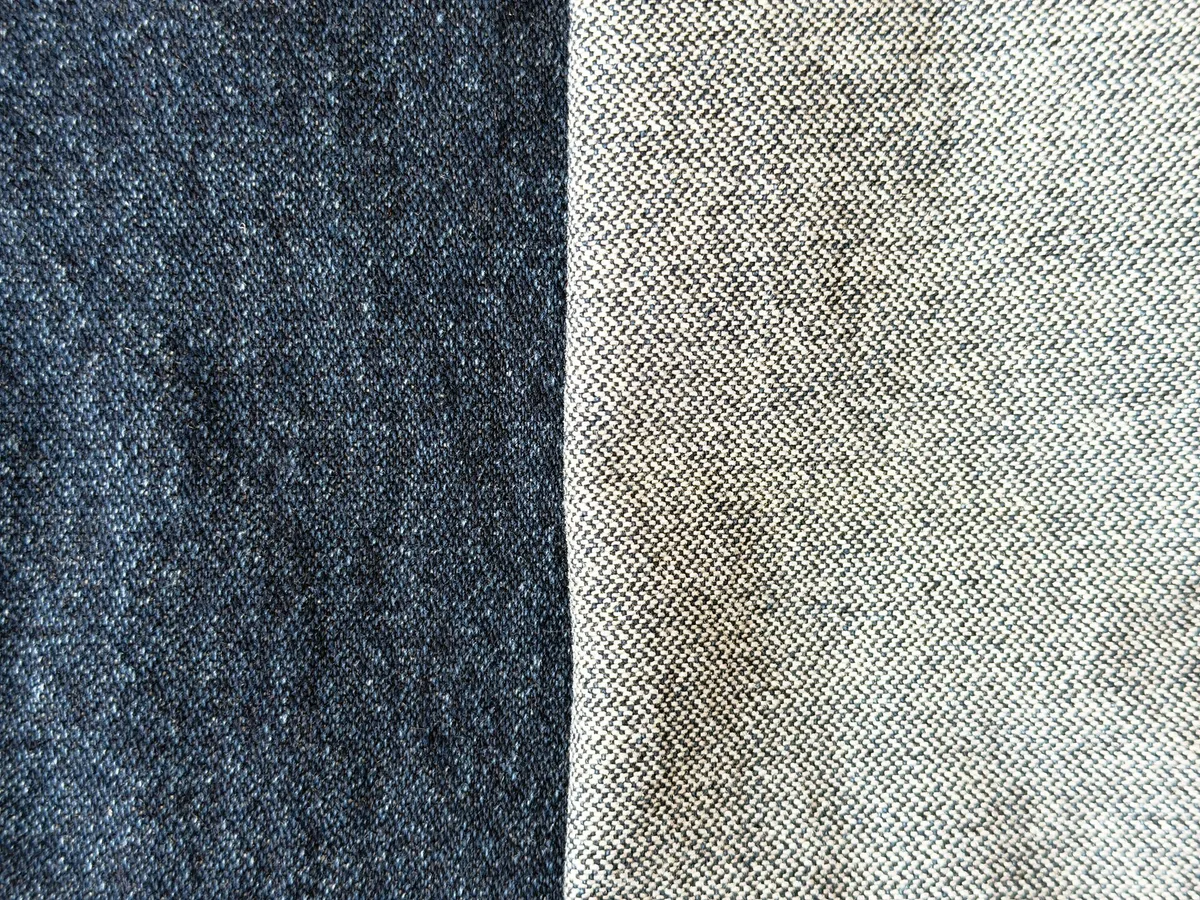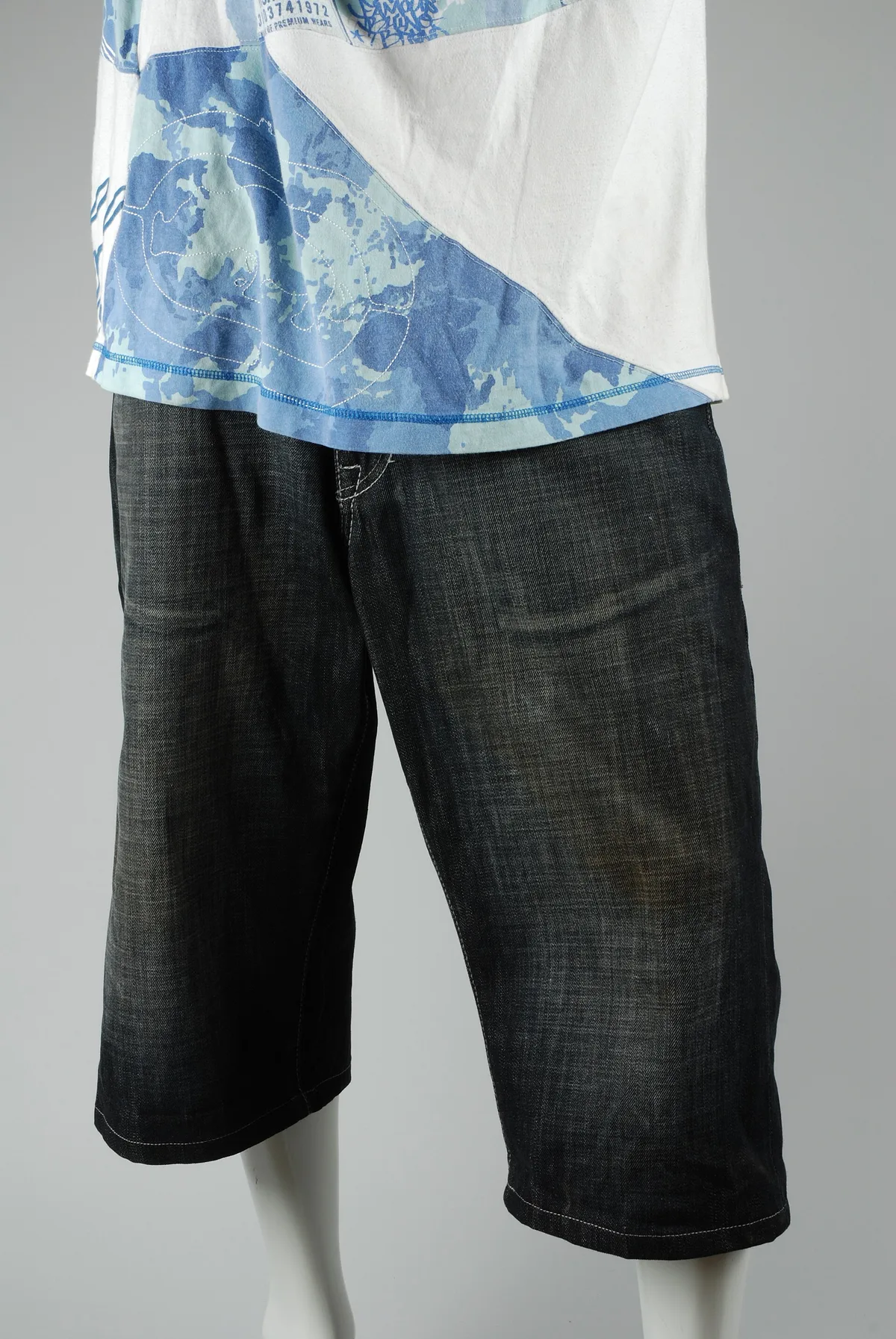
80s outfits hold up through two garments: the padded shoulder and washed denim. Everything else the decade produced was decoration, and the plain route skips it. Get the shoulder right, keep the denim honest, and the look reads modern rather than themed.
The record supports the reduction. The FIT Fashion History Timeline describes the decade as jackets with heavily padded shoulders, vibrant colors and bold accessories, set against acid-washed and stone-washed jeans. Two garments carried the era. Both are still in production, and two rules follow them: one loud piece, one plain partner. The decoration is not wrong; it is just optional.
The power shoulder, one loud item at a time
The power shoulder had a job. FIT links padded jackets to the wave of women entering male-dominated workplaces in the 1980s. Television amplified the silhouette; Dynasty, from 1981, spread it to a mass audience. The designers of the decade built on structure rather than drape. Karl Lagerfeld revived Chanel in 1983. Thierry Mugler, Gianni Versace, Jean Paul Gaultier and Christian Lacroix all worked in strong lines. Designers turned the office signal into eveningwear as well, and runway shoulders grew sharper than any boardroom needed.
The modern rule is rationing. One strong shoulder per outfit, in a soft cloth and a quiet color, over a slim base. A structured blazer over a straight jean keeps the power and drops the set design. This is the piece of 80s outfits most worth owning, because it works over almost anything plain. The fit should still sit clean at the shoulder seam. Padding extends the line; it should not swallow it. For related coverage, see 90s outfits still work through grunge, minimalism and borrowed tailoring.
Denim, washed but plain
The denim of the decade was wash-first. FIT records acid-washed and stone-washed jeans with high waists and straight legs, replacing the flares of the 1970s. That cut is the one worth borrowing now. The wash is the period detail. The high waist and straight leg are simply good proportions that flatter most bodies. Fit matters more than wash here. A rise that sits at the natural waist does the work; a rise that gapes undoes it.
Plain means plain. One wash, no distressing beyond a single ripped knee, no colored panels, no pressed creases. The 1980s washed its denim loudly; a modern take picks a mid or light wash and lets the cut speak. Full length beats cropped here. The long line keeps the era's proportions, and the stack reads intentional on 80s outfits built this way.
The volume rule that saves it
Every 80s outfit is a balance problem. The shoulder widens the top, so the bottom narrows: straight jeans, slim skirts or narrow trousers. Two wide pieces at once lose the shape that made the silhouette read as power rather than bulk. One exception exists: a long coat over slim denim keeps balance through length instead of width.
The era itself proved the point by ending. Vogue's history of the 1990s notes that the recession after the 1989 crash swept away 1980s excess, and minimalism took over. The lesson for revival dressing is exactly that edit: keep the shoulder, keep the wash, cut the rest of the stack. That edit is what keeps 80s outfits wearable now.
What still reads modern
A short list of 80s outfits survives the filter. A softly padded blazer in a solid color. High-waisted straight jeans in one wash. A plain white or black base underneath. Vibrant color, the era's other signature, works as a single accent: one red lip or one bright shoe, never the full palette at once. A plain belt and a white shirt cover the rest of the list. If the wash reads costume, size down the detail, not the fit.
The costume trap is stacking signals. Shoulder pads plus washed denim plus bright color plus big jewelry is a television reunion special. A belt can even replace a pad: a firm belt over a strong jacket gives the same triangle without shoulder architecture. One or two signals, over quiet modern basics, is how the decade's structure stays useful.
Conclusion
80s outfits come down to a padded shoulder and honest washed denim. FIT's record ties the shoulder to women entering the workplace, and Vogue ties the era's end to the crash of 1989. Wear one loud piece, keep the denim plain, and the structure works in a modern closet without the costume. We covered a connected angle in White sneakers women live in come down to three pairings.